
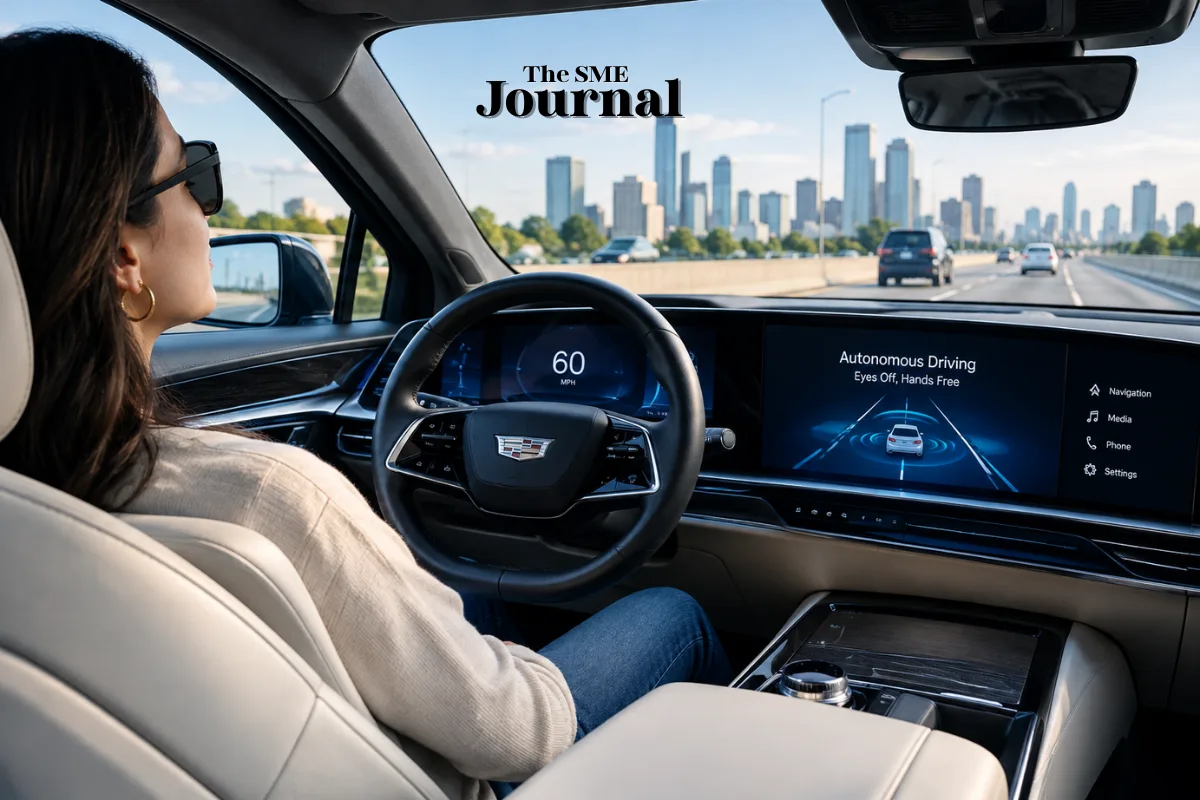
General Motors is working towards an automated driving system that could enable drivers to take their eyes off the road under specific conditions. GM is testing reactions to simulated driving situations as it develops technology that it hopes will evolve beyond current hands-free driver-assistance systems.
The company’s efforts reflect a critical challenge for the automotive industry: advancing automated driving systems so that they carry out a greater share of the driving while being able to operate safely and predictably. GM is aiming to bring eyes-off driving technology to market by 2028, with the Cadillac Escalade IQ set to be among the first vehicles to use it. But the technology also has engineering and regulatory hurdles to clear.
How GM Is Testing Eyes-Off Driving
Instead of only testing on actual roads, GM is using immersive simulations to study drivers’ reactions to various traffic scenarios. Researchers can recreate driving scenarios in a controlled setting and examine human reaction to them without risking lives in testing every possibility on the road.
These simulations can help engineers investigate how a vehicle might react to varying road conditions and how drivers will react to situations in which automation assumes some control. Understanding that relationship is crucial because an eyes-off driving system must be able to manage its operating conditions reliably and communicate clearly when a driver needs to take over.
Simulation doesn’t replace real-world testing, but it can give engineers an opportunity to analyze a variety of situations before bringing a technology to consumers.
From Hands-Free to Eyes-Off Driving
Hands-free driving systems allow drivers to remove their hands from the steering wheel in certain supported conditions, but they also require drivers to be watching the road. Eyes-off driving represents the next level: in the conditions in which the car is designed to operate, more of the driving is assumed, and the driver is not required to actively watch the road at all times — at least not continuously.
It doesn’t mean that the vehicle can drive anywhere, in any conditions, without limits. The distinction is important because the capabilities of automated driving systems vary, as do the responsibilities of drivers.
Safety and Regulation Remain Key Challenges
The shift towards eyes-off driving raises questions about the safety, driver awareness and responsibility in the face of new technology. Automakers must demonstrate that their systems can handle the circumstances for which they are approved and react appropriately in situations that are outside their experience. Regulators will likely play a key role in determining how and where eyes-off driving systems can operate. Until the technology has been approved and is available in production vehicles, drivers should not assume that their current hands-free features allow them to stop watching the road.
GM is not the only automaker pursuing more advanced driver-assistance systems. Other manufacturers are also working on systems designed to reduce overall driver input. The challenge ahead is turning promising technology into a reliable feature that works safely beyond controlled demonstrations.
What This Means for the Future of Driving
GM’s efforts illustrate the importance of simulation, practical testing and safety analysis as part of the next generation of vehicle automation. The automotive industry is moving from keeping a car in its lane or maintaining distance from traffic to systems that may eventually take on a greater share of driving. The target arrival date of 2028 is not a guarantee of immediate availability for all drivers, but the rate of adoption will be dictated by technical performance, regulatory approval and the ability of automakers to demonstrate that drivers and other traffic will be safe.
Consumers should consider not only the ability of their cars to be able to drive without requiring constant hands-on input, but whether the technology can be trusted to handle traffic within certain confines and respond appropriately to unexpected circumstances. As GM continues its testing efforts, the next step from hands-free to eyes-off driving will be measured not only by the amount of control a vehicle can exert, but by how safely the technology can operate in the real world.







.webp)