
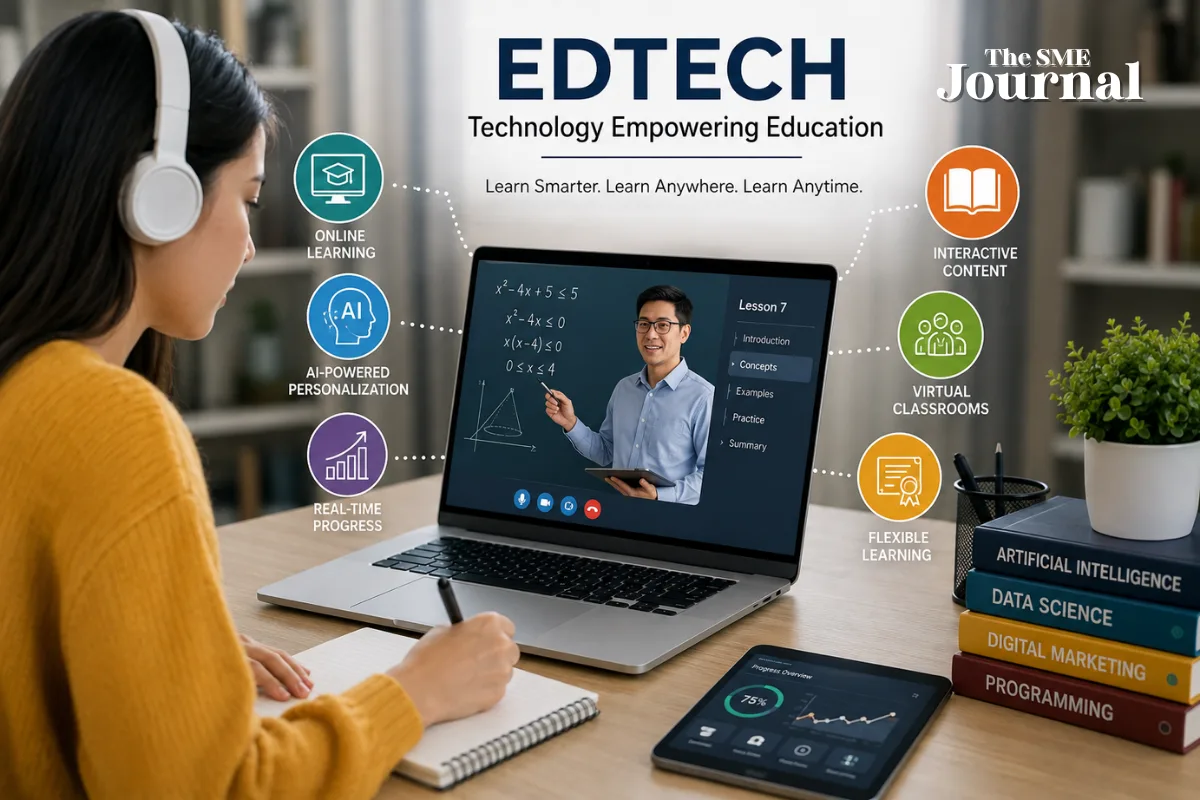
Education has always evolved with society, but technology is changing that evolution at a much faster pace. From virtual classrooms and learning apps to artificial intelligence and interactive digital tools, education is no longer limited to a classroom, a textbook, or a fixed timetable.
This transformation is commonly known as EdTech, or educational technology.
What makes EdTech interesting is that it isn't simply about putting traditional lessons online. The bigger change is in how students learn, how teachers teach, and how educational institutions understand what learners need.
For a student struggling with a particular subject, technology can provide another explanation, an interactive exercise, or an opportunity to practise at their own pace. For teachers, digital tools can reduce repetitive work and provide better insights into student progress.
Learning Is Becoming More Flexible
One of the biggest advantages of EdTech is flexibility.
Traditional education generally follows a fixed structure. Students attend classes at particular times, follow the same curriculum and move through lessons at roughly the same pace.
Digital learning can be very different.
Students can access lessons from a laptop, tablet or smartphone and often choose when and where they want to study. Someone who understands a topic quickly can move ahead, while another learner can revisit a difficult lesson without feeling pressured to keep up with the rest of the class.
This flexibility has also made learning more accessible to people who may not be able to attend traditional institutions because of location, work commitments or other responsibilities.
Artificial Intelligence Is Bringing Personalisation
Artificial intelligence is becoming one of the most talked-about developments in education technology.
Instead of giving every student exactly the same learning experience, AI-powered platforms can analyse performance and identify areas where a learner may need additional help.
For example, if a student repeatedly struggles with a particular type of mathematics problem, an AI-powered learning system could provide additional practice or recommend material covering the underlying concept.
The idea is simple: learning should respond to the student, rather than expecting every student to respond to the same learning method.
AI can also help teachers with tasks such as generating practice questions, organising learning materials and identifying patterns in student performance.
However, technology doesn't eliminate the need for teachers. Education involves motivation, empathy, creativity and human interaction—areas where teachers remain incredibly important.
Interactive Learning Can Make Education More Engaging
Let's be honest: not every student enjoys sitting through a long lecture or reading pages of a textbook.
EdTech platforms are experimenting with more interactive approaches to learning. Quizzes, simulations, educational games, videos and virtual experiences can turn a passive lesson into something students actively participate in.
Gamification is particularly popular because it introduces elements such as challenges, progress levels and rewards into learning.
Used properly, these tools can make difficult subjects feel less intimidating and encourage students to keep practising.
The goal, however, shouldn't simply be to make education entertaining. Technology needs to improve understanding rather than becoming a distraction.
Teachers Are Becoming Technology Users, Too
The EdTech conversation often focuses on students, but teachers are equally important to the transformation.
Digital platforms can help educators prepare lessons, communicate with students, organise assignments and monitor academic progress. Some tools can also automate repetitive administrative tasks, giving teachers more time to focus on teaching itself.
Technology can also make collaboration easier. Teachers can share resources, communicate with colleagues and access educational material from around the world.
But introducing new technology isn't automatically beneficial.
Teachers need proper training and enough time to understand how a tool actually works. A sophisticated platform is unlikely to improve education if educators find it confusing or difficult to integrate into their existing teaching methods.
Online Education Has Changed Expectations
The growth of online education has also changed what people expect from learning.
Students increasingly want education that fits around their lives. Professionals may want to learn new skills without leaving their jobs, while entrepreneurs may look for specialised knowledge without enrolling in a traditional degree programme.
This has created opportunities for online courses, professional training platforms, certification programmes and specialised learning communities.
The result is a broader idea of education.
Learning doesn't necessarily have to stop when someone leaves school or university. Technology makes it easier for people to continue developing skills throughout their careers.
The Digital Divide Remains a Challenge
Despite its potential, EdTech isn't a perfect solution.
Not every student has access to a reliable internet connection, modern devices or a quiet place to study. In some communities, these basic barriers can prevent learners from benefiting from digital education.
There are also concerns around privacy and data security. Educational platforms can collect information about students' performance, behaviour and learning habits. Schools and technology providers therefore need to be careful about how that information is collected, stored and used.
Another challenge is screen time. More technology doesn't automatically mean better learning. Students still benefit from discussions, physical activities, social interaction, hands-on experiences and time away from screens.
What Does the Future of EdTech Look Like?
The future of education is unlikely to be completely digital.
Instead, the most effective model may combine technology with traditional teaching. A student might learn a concept through an interactive platform, discuss it with a teacher, practise it through digital exercises and then apply it to a real-world project.
That combination could make education more personalised without losing the human element that makes learning meaningful.
AI, virtual learning environments, adaptive platforms and other technologies will continue to develop. But the central question shouldn't be how much technology schools can use.
The better question is whether the technology actually helps people learn better.
EdTech has the potential to make education more flexible, personalised and accessible. Its success, however, will depend on how thoughtfully it is implemented.
Technology can provide the tools. Teachers, students and educational institutions still determine how those tools are used.
Frequently Asked Questions
1. What is EdTech?
EdTech, short for educational technology, refers to the use of digital tools and technologies to support teaching, learning and education management.
2. How is AI used in education?
AI can help personalise learning, analyse student performance, create educational content, provide automated assistance and help teachers identify areas where students may need additional support.
3. Can EdTech replace teachers?
No. EdTech can automate certain tasks and support learning, but teachers provide human guidance, motivation, empathy, creativity and context that technology cannot fully replace.
4. What are the main benefits of EdTech?
Major benefits include flexible learning, personalised education, interactive content, easier access to resources and better tools for tracking student progress.
5. What are the challenges of EdTech?
Key challenges include unequal access to technology, data privacy, cybersecurity, screen-time concerns and the need to properly train teachers and educators.









.webp)