
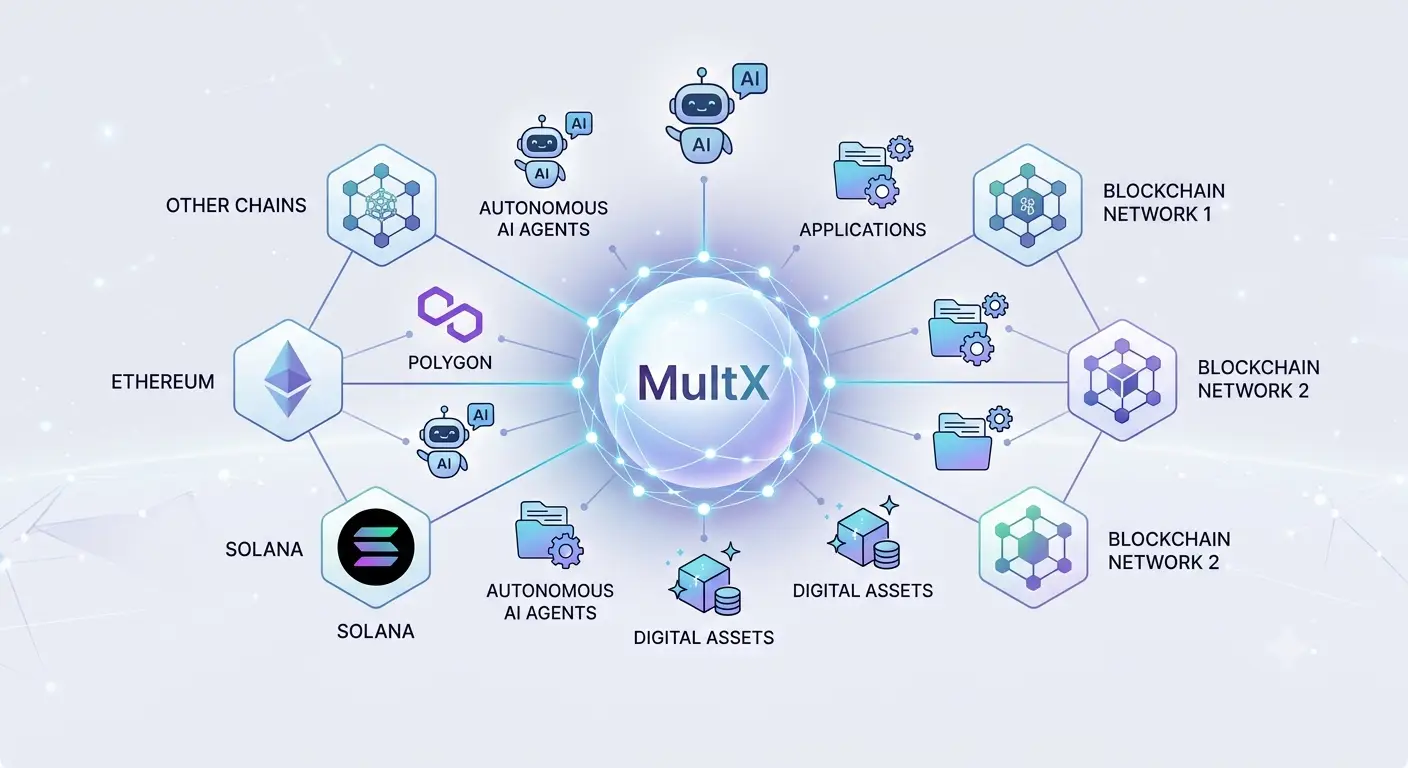
Lithosphere is taking cross-chain technology a step further with MultX, a coordination layer designed to bring blockchains, autonomous AI agents, and applications closer together. The goal is to make different networks work more seamlessly, creating a more connected and flexible foundation for the emerging Web4 ecosystem.
Blockchain technology has opened the door to a more decentralized internet, but one challenge continues to slow its progress: different blockchain networks often struggle to communicate with one another.
Lithosphere is working to address that challenge through MultX, its cross-chain coordination infrastructure designed to connect blockchain networks, applications, digital assets, and autonomous agents. The broader goal is to make Web4 more connected, allowing different systems to work together instead of operating as isolated digital islands.
MultX Brings Blockchain Networks Closer Together
As blockchain ecosystems continue to expand, developers increasingly need applications that can operate across multiple networks. MultX is designed to support this kind of cross-chain interaction by helping coordinate activities between connected blockchain environments.
Instead of building applications around a single blockchain, developers can use MultX to create workflows that interact across different networks. This could make it easier for applications and digital assets to move through interconnected ecosystems while maintaining consistent coordination.
The technology forms part of Lithosphere’s broader Web4 architecture, which combines several components designed for different aspects of decentralized applications.
How MultX Fits Into Lithosphere’s Web4 Vision
MultX works alongside Lithic, Lithosphere’s AI-native execution environment. The ecosystem also includes PPAL, which is designed to provide persistent identity, and DNNS, a decentralized naming and discovery system.
Together with LEP100 standards and LITHO utility, these components are intended to create a foundation where blockchain networks, intelligent agents, and applications can interact more effectively.
For developers, the bigger appeal is the possibility of building applications that do not have to remain locked within a single blockchain environment. Cross-network communication could support more flexible applications while helping maintain identity, execution, and decentralized discovery.
Supporting the Rise of Autonomous Web4
Lithosphere is continuing to develop its Layer 1 ecosystem, with interoperability playing an important role in its strategy.
As decentralized applications become more sophisticated, they are increasingly likely to interact with multiple networks, services, and autonomous agents. MultX is intended to provide the coordination layer needed for these interactions.
This becomes particularly relevant as AI-powered agents enter blockchain ecosystems. Autonomous systems may need to communicate with different networks, access digital assets, execute transactions, and respond to changing conditions without relying on a single blockchain.
By combining cross-chain coordination with AI-native execution, Lithosphere is positioning MultX as part of a broader infrastructure for what it describes as autonomous Web4.
Why Cross-Chain Coordination Matters
Blockchain fragmentation is not a new problem. Different networks have their own technologies, applications, assets, and communities. While this diversity encourages innovation, it can also make the overall ecosystem harder to navigate.
Cross-chain infrastructure could help reduce some of those barriers.
MultX focuses on connecting applications, assets, and intelligent systems across blockchain environments. If the technology can scale effectively, it could give developers more flexibility when designing applications that depend on multiple networks.
The potential benefits include:
- Cross-chain coordination between connected blockchain networks.
- Greater flexibility for developers building multi-network applications.
- AI-native execution through Lithic.
- Persistent identity through PPAL.
- Decentralized naming and discovery through DNNS.
- More connected Web4 workflows involving applications and autonomous agents.
A Step Toward a More Connected Blockchain Future
The real significance of MultX may ultimately depend on adoption. Technology that connects blockchain networks is only valuable at scale when developers, applications, and users actually use it.
Still, Lithosphere’s approach reflects a broader direction within the blockchain industry: moving away from isolated networks toward ecosystems where different chains, applications, and intelligent systems can communicate more naturally.
As autonomous agents and AI-driven applications become more prominent, the demand for reliable cross-chain coordination could grow. MultX is Lithosphere’s attempt to build infrastructure for that future.
Whether it becomes a major backbone for Web4 remains to be seen, but the idea is straightforward: a decentralized internet will need its networks to communicate if it wants to operate as one connected ecosystem.
Frequently Asked Questions
1. What is MultX?
MultX is Lithosphere’s cross-chain coordination infrastructure, designed to help applications, digital assets, and autonomous systems interact across connected blockchain networks.
2. Why is cross-chain coordination important?
Cross-chain coordination can help different blockchain networks communicate and work together, reducing fragmentation and giving developers more flexibility when building decentralized applications.
3. How does MultX support Web4?
MultX is designed to coordinate applications and autonomous agents across multiple networks, forming part of Lithosphere’s broader AI-native Web4 architecture.
4. What is Lithic in the Lithosphere ecosystem?
Lithic is Lithosphere’s AI-native execution environment, designed to support blockchain applications and intelligent systems within its Web4 infrastructure.
5. Could MultX become important for autonomous blockchain applications?
Potentially. As AI agents and decentralized applications increasingly operate across multiple networks, cross-chain coordination could become an important part of the infrastructure needed to support these systems.








.webp)