
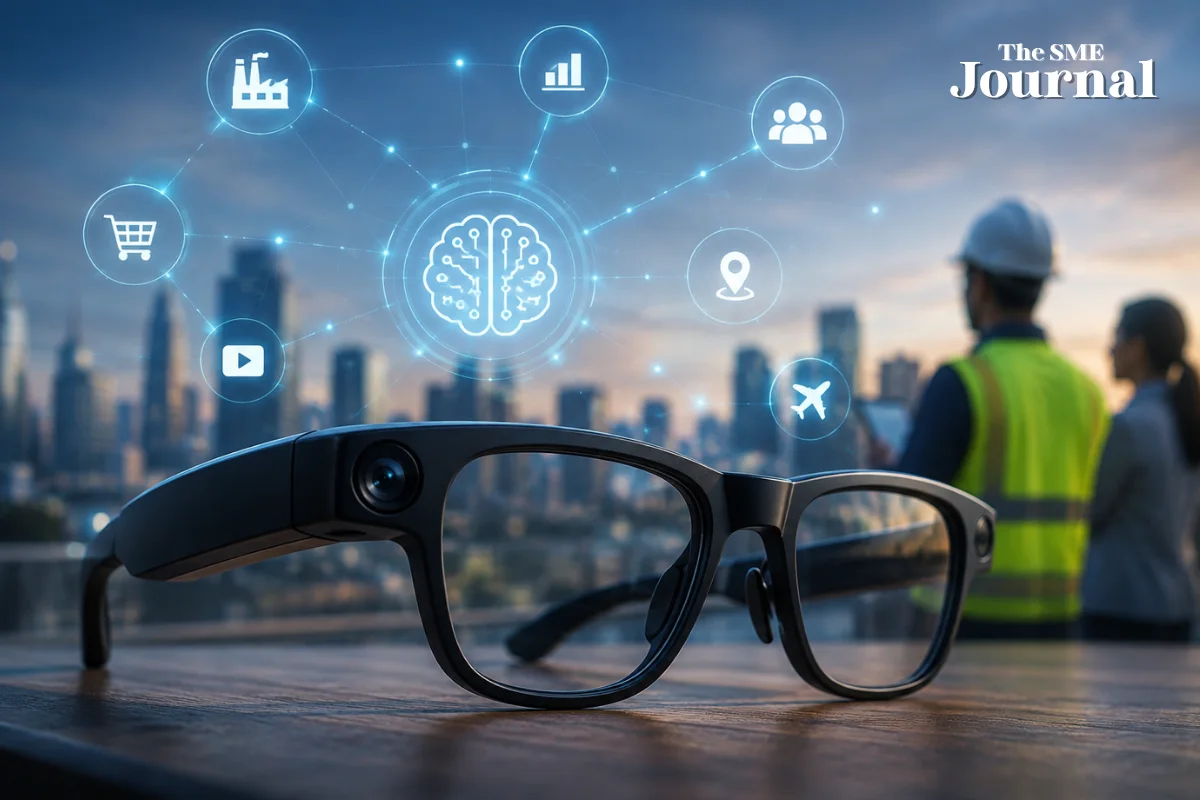
Smart glasses have been around for years, but they have struggled to become a mainstream consumer technology. Early versions attracted plenty of attention, but many had bulky designs, limited features, and few clear reasons for people to use them every day.
That is starting to change.
Advances in artificial intelligence, cameras, audio, battery technology, and voice recognition are making smart glasses more useful and practical. Instead of putting a screen directly in front of the user's eyes, many newer glasses focus on hands-free communication, taking photos and videos, listening to audio, and getting help from AI.
This change is creating opportunities that go far beyond selling glasses. AI-powered eyewear could lead to new apps, workplace solutions, media formats, retail experiences, and business models.
From a Novelty to an Everyday Device
For any technology to become successful, people need to understand how it can fit naturally into their daily lives. Smartphones became essential because they brought communication, photography, navigation, and internet access together in one device.
AI-powered glasses could follow a similar path, although they are more likely to work alongside smartphones than replace them.
Their biggest advantage is convenience. Users can ask a question, listen to information, or capture a photo without reaching into their pockets for their phones.
Products such as Ray-Ban Meta glasses show how smart technology can be built into familiar-looking eyewear instead of making users wear something that looks like complicated equipment.
Design is especially important in this market. People who wear glasses may have them on for hours every day, so comfort and appearance matter just as much as technology. Companies that can combine technology with fashion could have a strong advantage.
New Opportunities for App Developers
The glasses themselves are only one part of the opportunity. A much larger market could develop around the apps and services that run on them.
Developers could create hands-free tools for travel, work, education, communication, and entertainment.
For example, a travel app could give spoken information about nearby attractions. A productivity app could turn a quick voice note into a list of tasks. A training app could guide someone through a process while keeping their hands free.
However, developing for smart glasses is different from developing for smartphones. Users are unlikely to want complicated menus or long answers while wearing glasses.
The best experiences will probably be short, useful, and easy to control through voice or simple interactions.
Developers who understand these new habits early could help shape how people use smart eyewear in the future.
Growing Opportunities in the Workplace
Some of the biggest opportunities for smart glasses may come from businesses rather than everyday consumers.
Technicians, warehouse workers, inspectors, and field-service employees often need information while working with their hands. Smart glasses could give them access to instructions, help them document their work, or connect them with experts remotely.
Imagine a technician repairing a machine and using the glasses to send a picture to an experienced engineer. An inspector could record notes using their voice instead of stopping to type. A warehouse employee could receive spoken directions while moving around a facility.
These uses could create opportunities for software companies, system integrators, and workplace training providers.
Businesses may also need tools to manage these devices, including software for security, updates, user access, and company data.
The Rise of First-Person Content
AI-powered glasses could also change how creators produce content.
Because the camera sits close to the user's natural line of sight, creators can record from their own perspective while keeping their hands free.
This could work especially well for travel videos, cooking, sports, tutorials, crafts, live events, and behind-the-scenes content.
For viewers, first-person videos can feel more personal because they see an activity from the creator's perspective.
A new ecosystem could grow around this type of content. Editing companies could develop tools specifically for wearable footage. AI could find the best moments from long recordings, create transcripts, or turn one long video into several short social media clips.
Brands could also use this format for product demonstrations. Instead of highly scripted advertisements, creators could show how products are actually used in everyday situations.
The main challenge will be keeping the content authentic. If brands control the content too heavily, they could lose the natural feeling that makes first-person videos attractive.
New Possibilities for Retail
Smart glasses could also change the way people shop and interact with businesses.
A customer could potentially ask the glasses for product information, compare products, or save something they see while shopping. Retail employees could check inventory or product details without walking away from the customer or using a computer.
This could create new opportunities for retailers, online commerce companies, and customer-experience providers.
For these systems to work well, businesses will need accurate product information, up-to-date inventory, and simple voice-based interfaces.
Smart glasses could also make remote consultations easier. A customer could show a sales adviser, technician, or stylist what they are looking at and receive advice in real time.
This could be particularly useful for products that require more explanation than a standard online product page can offer.
Travel, Hotels, and Local Discovery
The travel and hospitality industries could also benefit from smart eyewear.
Hotels could offer hands-free local guides. Museums could provide audio information about exhibits based on where visitors are standing. Travel companies could create interactive walking tours where users can ask questions instead of simply listening to a recorded guide.
Local businesses could also benefit.
For example, someone wearing AI glasses might ask for a nearby café, store, or tourist attraction. The AI assistant could then recommend options based on location, opening hours, and user preferences.
This could create a new form of search.
Businesses already work hard to appear in Google and other online searches. In the future, they may also need to make sure their information is easy for AI assistants to understand and recommend.
Accurate business listings, helpful descriptions, and strong customer reviews could become even more important when an AI assistant has to choose only one or two recommendations.
Privacy and Security Could Become a Major Business
Smart glasses come with cameras and microphones, which naturally creates privacy concerns.
Businesses using these devices will need clear rules about where recording is allowed, how information is stored, and who can access it.
That creates opportunities for cybersecurity companies, privacy consultants, and compliance providers.
Businesses may need secure storage systems, automatic data deletion, access controls, and technology that prevents recording in sensitive areas.
Manufacturers will also need to make it obvious when a camera is recording so people nearby are not left wondering whether they are being filmed.
Privacy should not be seen only as a legal responsibility. It could become a competitive advantage. People are more likely to use wearable technology when they trust the companies behind it.
Fashion Meets Technology
Smart glasses bring together two very different industries: technology and fashion.
Technology companies understand AI, software, connectivity, and electronics. Eyewear companies understand design, comfort, lenses, prescription needs, and personal style.
Combining these strengths could lead to valuable partnerships between technology companies, fashion brands, eyewear manufacturers, lens companies, retailers, and telecom providers.
How these products are sold will also matter.
Customers may want to try smart glasses before buying them, check the fit, test the features, and understand how prescription lenses work.
Traditional electronics stores may not have the optical expertise needed, while eyewear stores may need additional technical knowledge.
Companies that can bring these two worlds together could play an important role in the market.
Subscription and Service Opportunities
Selling the glasses may only be the beginning of the business model.
Companies could generate additional revenue through premium AI features, cloud storage, media management, and specialized applications.
Businesses could also pay for device management, security services, software updates, and technical support.
Accessories could become another revenue source. Charging cases, protective accessories, prescription lenses, and different frame styles could allow customers to customize their devices.
However, companies need to be careful with subscriptions.
If users have to pay multiple monthly fees just to access basic features, they may lose interest. The most successful subscription models will need to provide clear and continuing value.
Challenges Businesses Need to Solve
Despite the opportunities, AI-powered glasses still have several challenges to overcome.
Battery life needs to be good enough for everyday use. Voice recognition must work in noisy environments. AI responses need to be accurate, and the glasses must remain comfortable throughout the day.
Social acceptance is another major issue.
People may feel uncomfortable around someone wearing a camera-enabled device, especially if they cannot tell whether they are being recorded.
For businesses, the answer is to focus on solving real problems instead of adopting smart glasses simply because they are new.
The best applications will save time, make information easier to access, or offer experiences that would be difficult to provide through a smartphone.
A Business Opportunity Bigger Than the Glasses
The future of AI-powered eyewear is about much more than selling frames.
The technology could create an entire ecosystem involving apps, enterprise software, creative tools, retail services, travel experiences, cybersecurity, and more.
The biggest winners may not necessarily be the companies that pack the most features into their glasses. Instead, they could be the businesses that understand when hands-free technology actually makes people's lives easier.
As AI glasses become more comfortable, affordable, and capable, new opportunities will continue to appear in situations where using a phone is inconvenient.
The bigger shift is simple: instead of always holding technology in our hands, we may increasingly wear it.
That change could make AI-powered glasses one of the next important platforms for digital services and business innovation.
Frequently Asked Questions
1. What are AI-powered glasses?
AI-powered glasses are smart eyewear that uses artificial intelligence, cameras, microphones, and voice technology to provide hands-free assistance, communication, audio, and content capture.
2. What business opportunities can AI-powered glasses create?
They can create opportunities in app development, workplace solutions, retail, travel, content creation, cybersecurity, customer service, and subscription-based services.
3. How can businesses use AI-powered glasses?
Businesses can use them for field service, employee training, remote assistance, inventory management, inspections, customer support, and hands-free access to information.
4. Can AI-powered glasses change the way people shop?
Yes. They could help customers find product information, compare products, check availability, and receive personalized assistance through voice-based interactions.
5. What are the main challenges facing AI-powered glasses?
Key challenges include battery life, comfort, AI accuracy, vo








.webp)