
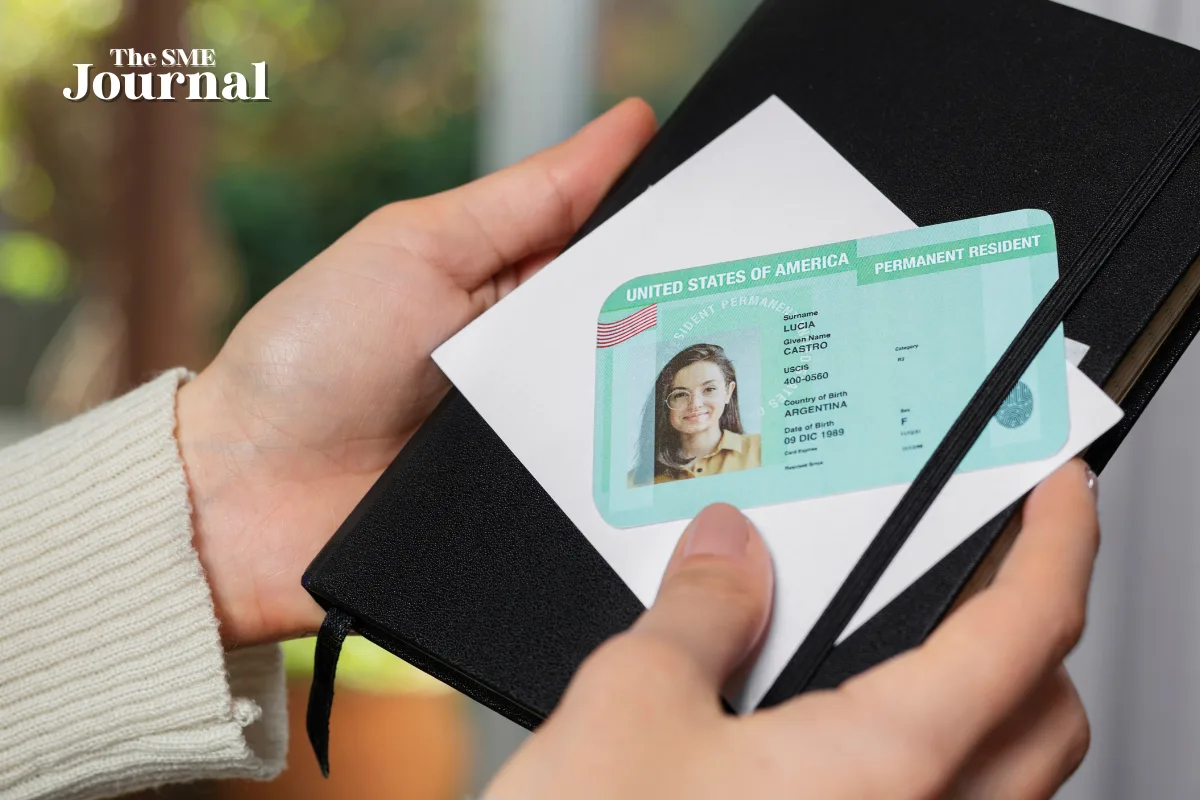
Digital identity is slowly becoming part of everyday life, and the UK is among the countries looking at how it could make online verification easier.
One area attracting particular attention is age verification. As more purchases and services move online, businesses need reliable ways to confirm a customer's age without always asking them to upload or show a passport, driving licence or other physical document.
The growing use of digital identity could offer a simpler alternative. Instead of handing over an entire identity document, people could potentially prove that they meet an age requirement while sharing only the information that is actually needed.
A Simpler Way to Prove Your Age
For many people, age checks are still a familiar but sometimes frustrating part of buying age-restricted products or accessing certain online services.
Digital identity could change that experience. A verified digital credential could confirm that someone is over a specific age without necessarily revealing their full date of birth, home address or other personal details.
That approach is particularly interesting because it combines convenience with privacy. Rather than giving a business access to a complete identity document, users could share a limited piece of verified information.
Why Businesses Are Interested
There is also a practical reason companies are paying attention to digital identity.
Retailers, financial companies and online platforms are dealing with increasing pressure to know who their customers are and prevent fraudulent or underage accounts. Manual checks can take time, while traditional online verification often involves uploading documents and waiting for them to be reviewed.
Digital credentials could make the process quicker and more consistent.
For businesses, the technology could eventually become useful well beyond age-restricted purchases. Online banking, e-commerce, financial services and other industries could all benefit from faster identity checks.
But Privacy Cannot Be Ignored
The convenience of digital ID comes with an obvious question: who gets access to our information?
People may be comfortable proving that they are over 18, for example, but they may not want a retailer to know their exact date of birth, address or other personal information.
This is where privacy-focused digital identity systems could make a difference. Technologies based on selective disclosure can allow users to prove a particular fact without revealing their entire identity profile.
Still, consumers will want clear answers about where their information is stored, who can access it and how long it is kept.
AI Is Adding Another Layer to the Identity Debate
Digital identity is also becoming more complicated as artificial intelligence moves into everyday services.
AI agents are beginning to move beyond simply answering questions or making recommendations. In some cases, they may eventually be able to make purchases, manage accounts or carry out financial transactions on behalf of users.
That creates a new identity problem.
Companies will need to know not only who authorized a transaction, but also which AI agent is performing the action and what that agent is allowed to do.
India is already looking at this issue. NPCI is developing protocols aimed at identifying and authorizing AI agents within the UPI ecosystem, showing how quickly the idea of digital identity is expanding beyond traditional human verification.
The Digital Identity Market Is Growing
The UK discussion is part of a much larger global shift.
The European Union is preparing its Digital Identity Wallet framework, while countries in Asia, Africa and other regions are investing in digital identity infrastructure.
For technology companies, this could create opportunities in areas such as digital wallets, biometric verification, fraud prevention and secure credentials.
For consumers, however, convenience alone will not be enough.
People need to feel that digital identity gives them more control over their information, not less.
What Comes Next?
The future of digital identity may ultimately be less about carrying another digital document and more about proving specific information when it is needed.
Someone may need to prove their age without revealing their birthday. A bank may need to verify a customer's identity without asking them to repeatedly submit documents. An AI agent may need to prove that it has permission to make a payment.
These are different problems, but they all point toward the same idea: digital trust.
As governments and businesses continue developing digital identity systems, the biggest challenge will be finding the right balance between convenience, security and privacy.
Digital identity has the potential to make online services much easier to use. But for that promise to become reality, people must remain in control of the information they share.
FAQs
1. What is digital identity?
Digital identity allows people to prove who they are or verify specific information about themselves using secure digital credentials.
2. Why is digital identity being used for age verification?
It can provide a faster way to confirm someone's age without necessarily requiring them to share a complete physical identity document.
3. Can digital ID protect personal information?
Yes. Privacy-focused systems can allow users to share only the information required for a particular transaction.
4. How could AI affect digital identity?
As AI agents begin carrying out tasks on behalf of people, systems may need to verify the agent's identity, permissions and authority.
5. What is the biggest challenge facing digital identity?
Building trust will be critical. Users need confidence that their identity information is secure and is not being collected or used unnecessarily.








.webp)