
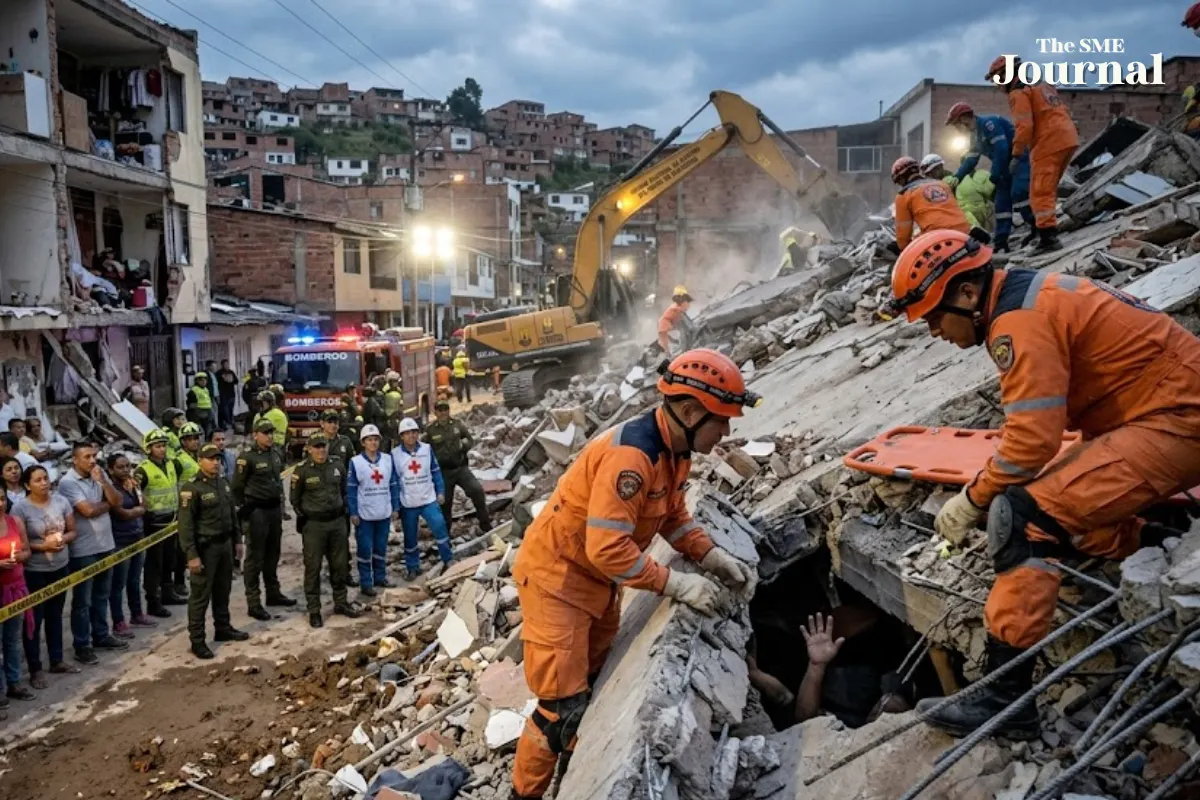
The death toll from the 7.4-magnitude earthquake that struck western Colombia has climbed to at least 254, with more than 3,000 people still unaccounted for. Rescue crews are pushing through exhausting, around-the-clock shifts, fighting the clock to reach survivors trapped under shattered concrete.
The quake, which struck at 7:34 AM on Monday near San José del Palmar in the Chocó department, is the strongest to hit the country in the 21st century.
"The national government has deployed all its capabilities to protect lives, assist affected communities, and deliver aid wherever it is needed," said President Abelardo de la Espriella during a national address. "Rescuing people still trapped under debris remains our top priority."
A Landscape of Destruction
The destruction stretches across at least 16 departments, including Chocó, Caldas, Risaralda, Quindío, and Valle del Cauca. Urban centers have taken a severe beating:
-
Cali: Reported 95 fatalities, with 239 people still trapped and nearly 1,000 injured.
-
Pereira: Recorded 90 deaths amid heavy structural damage.
According to the Colombian Association of Capital Cities, the tremor has leveled over 150 buildings, completely destroyed more than 1,100 homes, and damaged upwards of 8,000 structures. Crucial infrastructure has also been hit hard: 18 health centers, 52 schools, and 18 roads have sustained serious damage, creating immense hurdles for emergency teams.
"We are experiencing a major disaster," said Chocó Governor Nubia Carolina Córdoba Curi. "There are injuries and significant damage to buildings in our capital, Quibdó."
Fading Windows, Glimmers of Hope
Disaster response experts consider the first 72 hours after a major earthquake the critical window for saving lives. In Cali, local authorities established a single unified command post to guide incoming specialized teams.
The work is agonizingly slow, but there are moments of relief. Firefighters recently pulled a woman alive from the rubble after she spent 30 harrowing hours trapped beneath concrete.
"The rescue operation was complex and lasted about 16 hours. Rescuers had to work their way down seven or eight meters just to reach her," shared firefighter Santiago Sánchez. "We believe a further 24 people are buried under this single site."
In remote areas, landslides and blocked roads continue to slow search operations, leaving thousands of families waiting anxiously for news.
The Global Mobilization
International aid has begun moving toward the disaster zone:
-
United States Support: The U.S. has activated a Disaster Assistance Response Team (DART) and committed $15.5 million in emergency funds for shelter, food, and protective services.
-
Red Cross Network: The International Federation of Red Cross and Red Crescent Societies (IFRC) activated its large-scale emergency plan, mobilizing volunteers to supply aid.
"Our teams have been working around the clock in the hardest-hit communities," said Dr. Judith Carvajal de Álvarez, National President of the Colombian Red Cross.
Rebuilding Where Poverty Runs Deep
The epicenter lies in Chocó, Colombia’s poorest region, where more than two-thirds of the population lives below the poverty line. Dense jungle geography means many rural communities are accessible only by boat or aircraft—a challenge compounded by quake-triggered landslides.
"Access to some locations remains extremely difficult," noted Loyce Pace, IFRC Regional Director for the Americas. "As damage assessments evolve, we know the humanitarian needs will too."
Frequently Asked Questions
Q: What is the current human toll of the earthquake?
A: Official reports confirm at least 254 fatalities, with more than 3,000 people still unaccounted for as emergency teams continue searching through collapsed structures.
Q: Which regions and cities were hardest hit?
A: Western Colombia bore the brunt of the devastation. Urban areas like Cali, Pereira, Quibdó, and Manizales suffered severe structural damage, heavy casualties, and major disruptions to medical and transport infrastructure.
Q: Why are so many people still listed as missing?
A: Search efforts are being delayed by widespread infrastructure damage, landslides, and blocked transit corridors—especially in remote areas like Chocó—making it difficult for search teams to access many damaged sites.
Q: What international support has arrived or been promised?
A: The U.S. government has activated a Disaster Assistance Response Team (DART) and pledged $15.5 million in immediate aid for shelter and emergency supplies. Simultaneously, groups like the International Red Cross are mobilizing regional relief operations.
Q: Why are the next few days critical for rescue teams?
A: The first 72 hours after an earthquake are widely considered the vital window for finding survivors under rubble, as the chances of survival drop sharply without access to water, medical attention, or air.








.webp)