
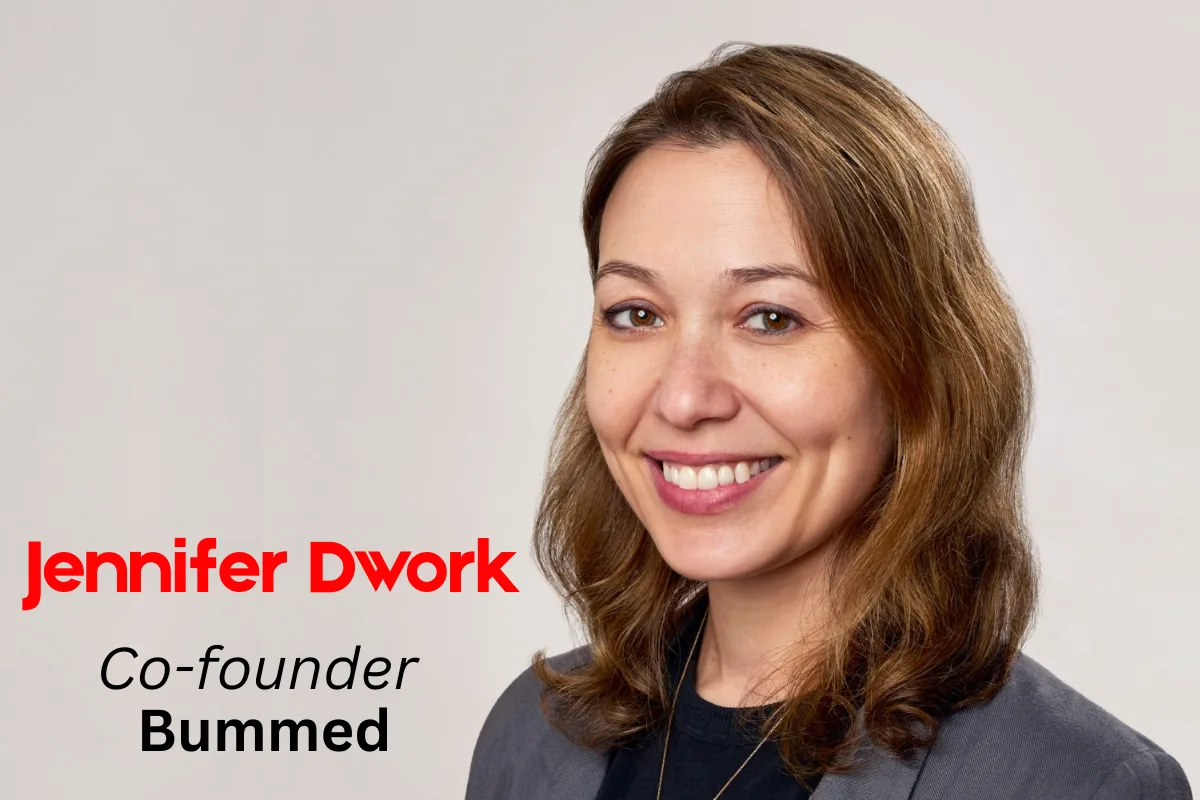
Healthcare is often discussed in terms of technology, innovation, and access. But for Jennifer Dwork, the most important part has always been the person sitting on the other side of the screen.
A digital health and marketing leader with more than 15 years of experience building brands, Dwork has spent much of her career finding better ways to connect people with healthcare. Her journey eventually led her to co-found Bummed, a digital health company focused on anorectal care and on making conversations around conditions such as hemorrhoids, constipation, and anal fissures less uncomfortable and more approachable.
What makes Dwork's story particularly interesting is that she did not choose an easy or conventional healthcare category. She chose one that many people would rather not talk about.
From Marketing to Meaningful Healthcare
Dwork's professional background is rooted in digital marketing, branding, and business leadership. Over the years, she worked with major consumer and healthcare brands and developed a deep understanding of how digital experiences can influence the way people discover and access services.
Her transition into digital health was shaped in part by the realization that technology could do more than sell a product. It could make healthcare feel more accessible, private, and human.
According to her professional biography, Dwork has led marketing teams of up to 20 people at companies generating hundreds of millions of dollars in annual revenue. She has also launched more than 30 telehealth products and services across areas including women's health, at-home testing, menopause, and other healthcare categories.
That experience became the foundation for her next chapter as an entrepreneur.
Why Jennifer Dwork Co-Founded Bummed
Bummed was founded by Dwork and Rebecca Monahan, both of whom had experience in digital health. They partnered with colorectal surgeon Dr. Carmen Fong to build a telehealth platform dedicated to anorectal health.
The idea was simple but powerful: people should not feel embarrassed about seeking help for a health problem.
Dwork has spoken openly about her own experience with hemorrhoids and the discomfort she initially felt seeking care. That personal experience helped her recognize a much larger problem—many people deal with these conditions, yet embarrassment can stop them from talking to a healthcare professional.
Bummed was created to challenge that silence.
The company describes its mission as providing personalized, science-backed solutions for anorectal health while making the subject easier to discuss. Its approach combines telehealth, medical expertise, education, and at-home care.
Making an Uncomfortable Conversation Easier
One of Dwork's biggest strengths is her ability to make difficult subjects feel approachable.
Anorectal health is rarely the first topic people bring up in casual conversation. Yet conditions affecting this part of the body are common. Dwork's philosophy is that embarrassment should not become a barrier to healthcare.
That philosophy is reflected in Bummed's branding. Instead of relying on overly clinical language, the company takes a more direct and approachable tone.
The goal is not simply to make healthcare sound friendlier. It is to encourage people to acknowledge a problem and seek appropriate care sooner.
As Dwork has explained, people need trust, empathy, education, and solutions rather than a one-size-fits-all experience.
Entrepreneurship With a Personal Perspective
Dwork's entrepreneurial journey has also been unusually personal.
She launched Bummed while pregnant, sharing that she was around 32 weeks pregnant when the company officially launched. She later reflected on how pregnancy changed her approach to entrepreneurship, particularly around prioritization, empathy, and balancing business responsibilities with personal life.
For Dwork, being a founder has therefore meant more than building a company. It has meant learning how to make decisions during a period of major personal change.
Her experience highlights a broader lesson for entrepreneurs: leadership is not always about working longer. Sometimes it is about understanding what deserves attention now and having the confidence to let less important things wait.
A New Approach to Digital Health
Dwork's work reflects a wider transformation taking place across healthcare.
Patients increasingly expect healthcare experiences to be convenient, private, transparent, and easy to navigate. Telehealth can help remove some of the traditional barriers between patients and providers, particularly for sensitive conditions.
Bummed's model focuses specifically on this intersection of convenience and stigma-free care. The platform offers online access to clinicians and treatments for several anorectal conditions, including hemorrhoids, constipation, and anal fissures.
The company also emphasizes medical expertise, working with specialists including colorectal surgeons, gastroenterologists, and OB-GYNs.
Beyond Bummed: A Mission-Driven Leadership Style
Dwork's career suggests that her interest in healthcare goes beyond building a single company.
Her professional profile describes her as someone passionate about mission-driven brands and digital health. She has also advised startups at different stages and continues to focus on making healthcare more accessible through technology.
Her leadership style appears to combine marketing expertise with a strong emphasis on empathy. That combination is increasingly valuable in healthcare, where a great product is not enough if patients do not trust it or feel comfortable using it.
For Dwork, the brand and the patient experience are closely connected.
The Bigger Lesson From Jennifer Dwork's Journey
Jennifer Dwork's story is ultimately about identifying a problem that people have normalized—and deciding that it does not have to remain that way.
She recognized that an uncomfortable healthcare category could be approached differently. Instead of avoiding the conversation, she and her co-founders chose to make it more open. Instead of expecting patients to navigate traditional healthcare pathways for every concern, they explored how telehealth could create a simpler experience.
Her journey from digital marketing leadership to entrepreneurship also demonstrates how skills from one industry can become powerful tools in another.
Dwork is not simply building a healthcare company. She is helping change the language around an area of healthcare that has traditionally been surrounded by embarrassment and silence.
And sometimes, meaningful innovation begins with being willing to talk about what everyone else avoids.
Frequently Asked Questions
1. Who is Jennifer Dwork?
Jennifer Dwork is a digital health marketing leader and entrepreneur. She is the co-founder and CEO of Bummed, a digital health company focused on anorectal care.
2. What is Bummed?
Bummed is a digital health and telehealth platform focused on anorectal health, including conditions such as hemorrhoids, constipation, and anal fissures.
3. Why did Jennifer Dwork start Bummed?
Dwork wanted to address the stigma and access problems surrounding anorectal health. Her own experience with hemorrhoids also helped her understand how uncomfortable it can be to seek care for these conditions.
4. What makes Jennifer Dwork's entrepreneurial journey unique?
Dwork combined extensive digital marketing and healthcare experience with entrepreneurship, launching Bummed while pregnant. Her experience has shaped her perspective on prioritization, empathy, and building a mission-driven company.
Final Thoughts
Jennifer Dwork represents a new kind of healthcare entrepreneur—one who understands that innovation is not always about creating the most complicated technology. Sometimes, it is about making people feel comfortable enough to ask for help.
Through Bummed, she is bringing attention to an overlooked area of healthcare and showing how thoughtful branding, digital technology, medical expertise, and empathy can work together.
Her journey is a reminder that entrepreneurship can begin with a simple question: What healthcare experience could be made better for people?
For Dwork, the answer was one that many people were too embarrassed to ask about—and that is precisely why she decided to build it.









.webp)