
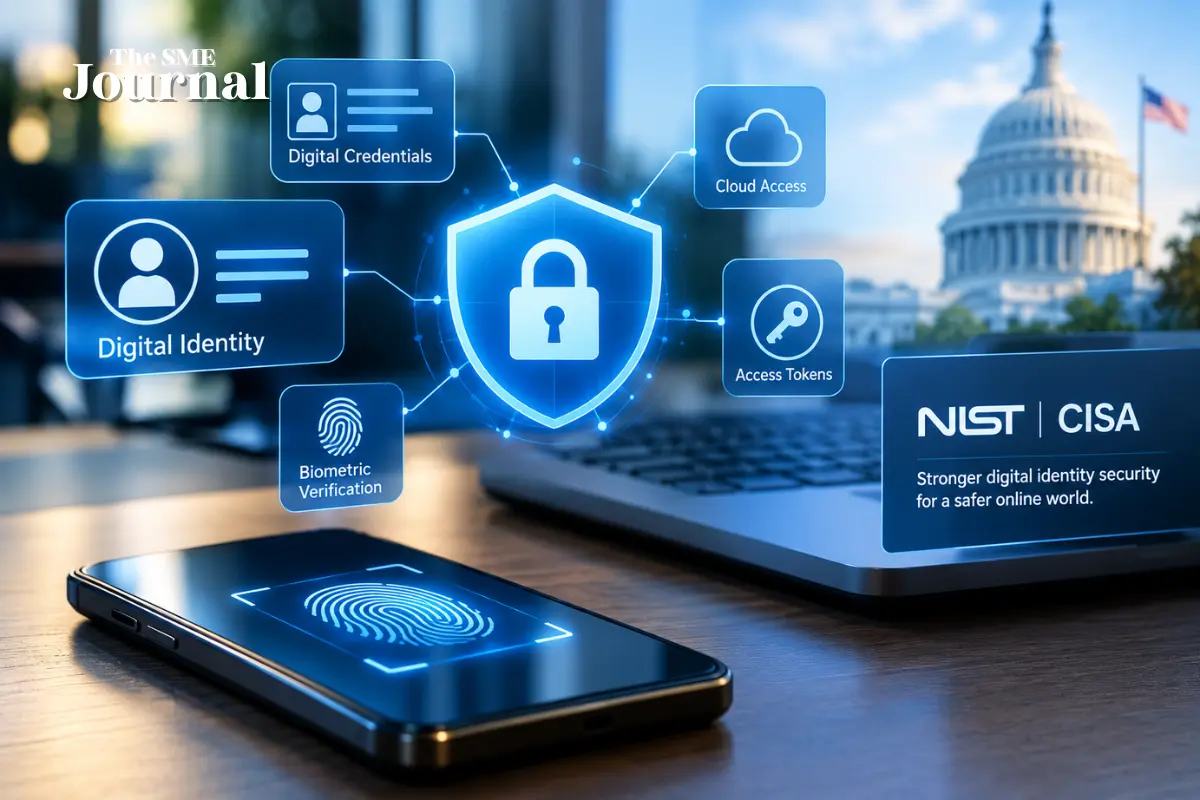
Digital identity is becoming a bigger part of everyday life. From logging into email and banking services to accessing cloud applications, people increasingly rely on digital credentials and invisible security systems to prove who they are.
Now, U.S. cybersecurity agencies are putting more attention on one of the less visible parts of digital identity: access tokens. On September 15, 2026, the National Institute of Standards and Technology (NIST), working with the Cybersecurity and Infrastructure Security Agency (CISA), finalized new guidance designed to help organizations protect identity and access tokens from theft, forgery and misuse.
Why Digital Identity Is Becoming More Important
When someone signs into an online service, the process may look simple. Enter a password, approve a security check and get access.
Behind the scenes, however, digital systems often use a token — a small piece of digital information that tells a service who the user is and what they are allowed to access. If that token falls into the wrong hands, an attacker may be able to gain unauthorized access without needing the user's password.
NIST says its newly finalized report, “Protecting Tokens and Assertions from Forgery, Theft, and Misuse,” provides implementation guidance for organizations that rely on these technologies. The recommendations are particularly relevant to federal agencies and cloud service providers, but the principles can also help other organizations handling digital identities.
The Challenge Goes Beyond Passwords
For years, conversations about online identity largely focused on passwords. That picture has changed.
Businesses now use multifactor authentication, biometric verification, digital credentials, access tokens and other technologies to establish whether someone should be allowed into a system.
That creates a new challenge: protecting the digital evidence of identity after a person has already authenticated.
NIST's guidance includes recommendations around token management, cryptographic keys and token revocation. It also takes into account emerging technologies, including artificial intelligence and the transition toward post-quantum cryptography.
AI Is Adding Another Layer to the Identity Problem
Artificial intelligence is also changing the digital identity landscape.
AI can help organizations identify suspicious activity and automate security processes, but it can also make it easier for criminals to create convincing fake identities, automate attacks and manipulate digital information.
That means organizations are increasingly looking at identity as more than simply a way to log users in. It is becoming part of the broader security infrastructure that determines who or what is trusted inside a digital environment.
NIST's updated guidance specifically includes considerations related to AI and emerging identity standards, reflecting how quickly the technology landscape is changing.
Digital Credentials Are Moving Into Financial Services
The push toward stronger digital identity is also reaching financial institutions.
In September 2026, the U.S. Office of the Comptroller of the Currency, together with FinCEN, the Federal Reserve, FDIC and NCUA, issued guidance explaining how banks can use government-issued verifiable digital credentials, including mobile driver's licenses, when meeting customer identification requirements.
For consumers, this could eventually mean less reliance on repeatedly providing physical documents when opening accounts or completing identity checks.
For banks, it could provide another way to verify customers while maintaining regulatory requirements.
Convenience vs. Privacy
The growth of digital identity comes with an important question: How much personal information should people have to share to prove who they are?
A digital credential can potentially make verification faster and more convenient. But the more identity information organizations collect and store, the greater the consequences if that information is misused or exposed.
This is why security experts increasingly focus not only on authentication, but also on limiting access, protecting credentials and quickly revoking compromised tokens.
The goal is relatively simple: prove that someone is legitimate without creating another unnecessary security risk.
What This Means for Businesses
For businesses, digital identity is moving from a technical back-office function to a core part of customer and employee security.
Companies adopting cloud services, AI tools and digital customer platforms will need to think carefully about how identities are created, verified, authenticated and protected throughout their entire lifecycle.
The latest NIST guidance is another sign that protecting digital identity is no longer just about having a strong password. It is about securing the entire chain of trust that allows people and systems to access digital services.
As more parts of everyday life move online, that invisible layer of identity security could become just as important as the applications people use every day.
Frequently Asked Questions
1. What is digital identity?
Digital identity is the collection of information and credentials used to verify a person or organization online.
2. Why is digital identity security important?
It helps protect online accounts, personal information and digital services from unauthorized access and identity-related attacks.
3. What are access tokens?
Access tokens are digital credentials that allow users or systems to access specific online services after authentication.
4. How is AI affecting digital identity security?
AI can help organizations detect unusual activity and strengthen security, but it can also make identity fraud and automated attacks more sophisticated.
5. How could stronger digital identity systems benefit businesses?
Stronger systems can make identity verification more secure and efficient while helping businesses protect customer and employee accounts.